
I still remember the exact moment I received my diagnosis.
It was a day wrapped in a kind of numb disbelief, the kind that makes words feel separate from meaning. Bipolar disorder. To my mind it was a label I barely understood, a concept I had only encountered in textbooks and news articles. I had lived long enough to feel that something was “off”, waves of emotion that didn’t match the moment, nights I couldn’t sleep but couldn’t rest, days when my energy felt unstoppable followed by weeks when the simplest tasks felt impossible. But to finally name it… that was another thing altogether.
Receiving that diagnosis was not triumphant. It was not clear. It was painfully confusing. I walked out of the clinic feeling as if I had both lost and gained something, lost the version of myself who believed she understood her mind, and gained a new language to make sense of what had been invisible for years.
For a long time afterward, I carried my diagnosis like a secret, part shame, part fear, part curiosity. I didn’t want others to see the diagnosis before they saw me. I didn’t want them tothink bipolar disorder defined all of who I was. But the truth was that, at that point, it felt like the diagnosis did define me, or at least it tried to. I questioned my identity, my purpose, and myfuture. I wondered if stability was something people like me ever truly experience.
The early days after diagnosis were filled with struggle. There were nights when depression felt too powerful to escape. There were moments when I questioned whether the medication or therapy or lifestyle changes would ever work, or if they even mattered. I faced stigma from others and fear from within. But over time, I stopped fighting what was happening and started accepting it, and that’s when healing truly began.
“Accepting a mental health diagnosis means no longer fighting your reality, but transforming survival into intentional living.” – Christine Ombima
I began to lean into treatment, not because it promised perfection, but because it offered a chance at peace. I learned to listen to my body and my mind with patience instead of judgment. I learned what stability felt like in small moments, a calm morning, a conversation without overwhelm, a day of productivity without exhaustion. I learned to celebrate those moments without minimizing them.
Living with bipolar disorder taught me that strength is not measured by how loudly you survive your storms, but by how steadily you learn to dance in the rain. My highs don’t define my ambition; my lows don’t define my worth. What defines me now is my resilience, my compassion, and my refusal to let fear control my story.
Over time, I saw that surviving wasn’t enough, I wanted to build, to create, to make my experience matter. Through Stand Out 4 Mental Health, I work with young people, educators, and communities to break the silence and stigma that so often surround mental illness.Everything I’ve lived through informs the work I do; my experience is part of the story I tell. Because I know how isolating it can feel to struggle in silence, I strive to create spaces where people feel seen, heard, and supported.
I am still on a journey, treatment continues, self-care is still something I prioritize daily, andthere are still hard days. Bipolar disorder stays part of my life, but I’ve learned to live with it instead of letting it live through me. I’ve learned to ask for help without shame, to honorboundaries without guilt, and to show up for others without losing myself.
What stands out now, more than any diagnosis, is hope. A kind of hope that grows from what we’ve actually lived through. Hope that says you can have setbacks and still rise again. Hope that tells others, you are not alone. And hope that says to anyone with bipolar disorder: your diagnosis is just a part of your story, what really shines is how you keep going.
“Recovery isn’t about becoming who you were before. It’s about becoming who you’re meant to be with everything you’ve lived through.” – Christine Ombima
If you are reading this and you have recently received a bipolar diagnosis, or you have been living with one for years, I want you to know this: your story is not over. It is not broken. And it is not less valuable because of what you are carrying.
There is no single “right” way to live with bipolar disorder. There is only your way, shaped by support, self-compassion, treatment, community, and time. Some days will be harder than others. Some days will surprise you with joy. Both can exist, and both are part of a full, meaningful life.
I encourage you to speak when you can, rest when you need to, and seek help without shame. Let others walk with you. Let yourself be human. And when hope feels distant, borrow it from those of us who are still standing, still rising, still choosing to believe in better days.
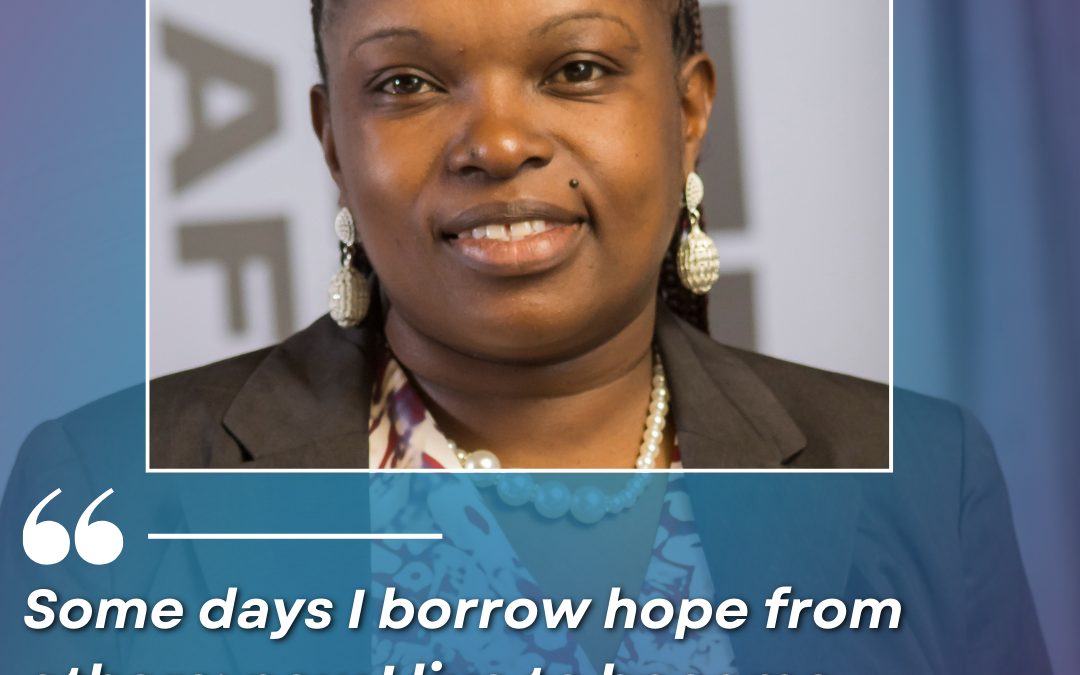
“Some days I borrow hope from others; now I live to become hope for someone else.” –Christine Ombima
Recovery is not about becoming who you were before the diagnosis. It is about becoming who you are meant to be with it. And that version of you is worthy, capable, and full of possibility.
You are not alone. And your face, too, belongs among stories of hope
