
What has taken you the longest to learn about living with bipolar disorder?
The longest lesson has been learning to take ownership of my illness.
For many years I experienced bipolar disorder as something that was
simply happening to me – something unpredictable and outside my
control. Over time I realized that while I didn’t choose the illness,
I am responsible for how I manage it.
Taking ownership means being honest with myself about my condition and
recognizing the patterns that affect my stability. It means paying
attention to sleep, stress, emotional triggers, and the early signs
that something may be off.
Ownership also means accepting that my actions matter. The choices I
make every day – how I take care of my mental health, how I manage
stress, and how I respond to difficult moments – directly affect my
wellbeing.
That shift in mindset changed everything for me. Bipolar disorder is
part of my life, but taking responsibility for managing it has been
essential to maintaining stability for the past 25 years.
What helps you reset after an overwhelming moment?
When I feel overwhelmed, I remind myself that managing my bipolar
disorder is my responsibility. That mindset helps me step back instead
of getting pulled deeper into the emotion of the moment.
The first thing I do is slow down. Bipolar disorder can intensify
emotions quickly, so creating a pause is important. I give myself
space to breathe, step away from the situation, or take a short walk.
I also try to check in with myself honestly. Am I tired? Stressed?
Overstimulated? Recognizing those factors helps me understand what
might be contributing to the moment.
Resetting is really about regaining balance. Taking ownership of my
illness means recognizing when I need to slow down, reset, and take
care of my mental health before moving forward.
How has your relationship with others changed over time?
Taking ownership of my bipolar disorder has changed the way I relate
to others. Earlier in my life, it was easy to feel like my moods and
reactions were just part of who I was, and that others needed to adapt
to them.
Over time I realized that my illness affects the people around me, and
I have a responsibility to manage it as best I can. That awareness has
made me more thoughtful and intentional in my relationships.
It has also made me more open. Being honest about my diagnosis and the
work it takes to maintain stability has helped people understand me
better. In many cases it has strengthened relationships because it
creates trust and transparency.
Taking responsibility for managing bipolar disorder has allowed my
relationships to become more stable, respectful, and supportive over
time.
What makes you feel most alive or engaged?
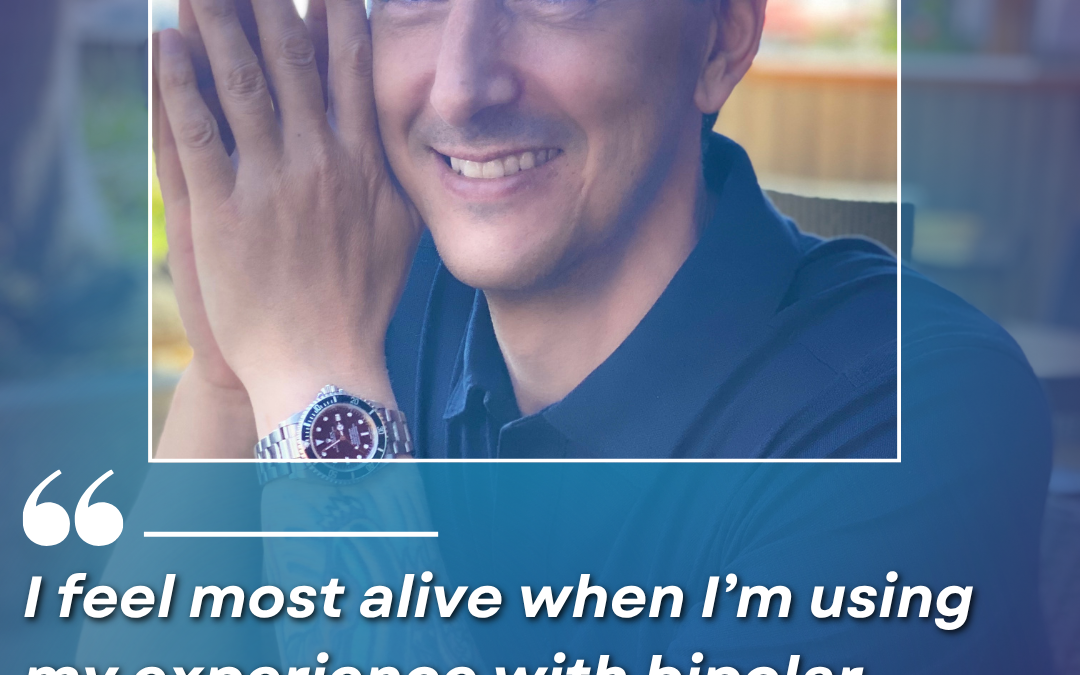
I feel most alive when I’m using my experience with bipolar disorder
to help others. Living with this illness has been one of the most
difficult challenges in my life, but it has also given me a
perspective that can be meaningful to other people.
Sharing my story – especially the experience of maintaining stability
for 25 years – allows me to show that recovery and long-term
management are possible.
What engages me most is the opportunity to turn something that was
once very difficult into something that creates understanding, hope,
and connection for others.
Taking ownership of my illness has allowed me to transform it from
something that controlled my life into something that helps me connect
with and support other people.
