
How has living with bipolar disorder shaped the way you see yourself?
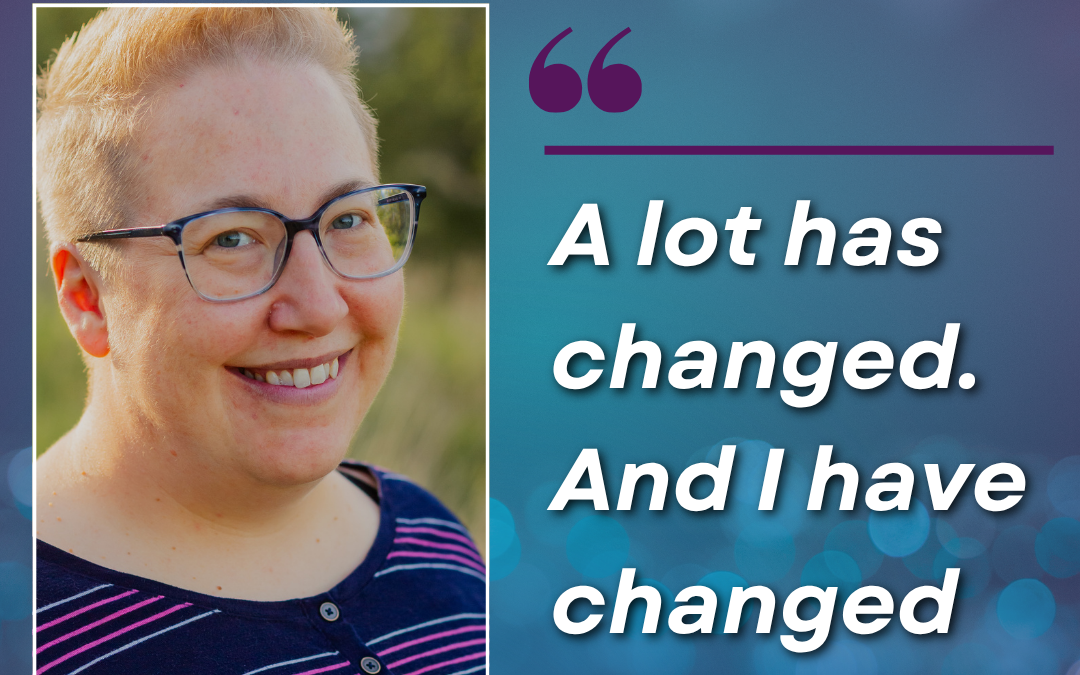
People who haven’t seen me in awhile don’t recognize me. People who know me now cannot believe old pictures of me are the same person. This makes sense to me. A lot has happened in the past decade. A lot has changed. And I have changed with it.
I have had several mental health crises and was eventually diagnosed with BiPolar Disorder 1. Additional personal trials and challenges accompanied these seasons. I am profoundly changed by all of this.
Before is not better than After or vice versa. But they are stark in their contrast. Yes the hair and make up or lack thereof is different. I wore contacts then, I wear glasses now. But it’s more than that. Something essential and internal has changed. And it shines through.
This is me now. Its ok if you don’t recognize me. I am profoundly changed.
How does community, friendship, or support shape your resilience?
I think we as a family all have a much better understanding now of BiPolar Disorder and how it presents in me. We have a lot of safeguards in place to try and prevent crisis. I’m grateful for this.
I try to ask for help from as many people as I can to bring into my circle of care. A psychiatrist, a family doctor, a pharmacist, a naturopath, a counselor, a peer support group, my family, people from my faith community, my co-workers and friends. For me being quite transparent helps me feel seen and enables me to more quickly identify when I am shifting. The more people in my circle, the more coping and self-care options I have learned.
I have said to those closest to me: When you notice me shifting, the most helpful thing for me is for you to name what symptoms you are seeing to me and ask if I am OK. Jana, you are talking really fast. I notice you’re spending a lot of money. I see that you’re super involved in advocating with this cause. Are you doing OK?
What words or advice do you come back to again and again?
I think it’s important to know that if you find yourself in a mental health crisis your dignity and autonomy still matter. When I was manic and escalating in the ER I asked for help. I said I want the patient phone to call my family; I want a social worker or a patient advocate; and I want to see a psychiatrist. I just want people to know you can always ask for an advocate. You can be treated for your illness and still maintain dignity.
In my worldview I see pillars of strong supports that are vital to maintaining wellness and avoiding crisis. For me the foundation is faith in God. Family, close friends, BiPolar peer support group, and skilled professionals make up some pillars of strength for me. Good sleep hygiene, stress management, and compliance with medications are key. Checking in regularly and rating my mood and tracking symptoms over time gives me insight and empowers me to make adjustments quickly when I shift.
How do you nurture relationships while caring for your mental health?
I think self-care and working hard to be healthy and stable is one of the very best ways I can nurture my relationships. “The invisible labour” of mental illness is very real. It takes commitment and hustle everyday to be able to show up and be present in a good frame of mind.
How I approach my relationships has changed. I have boundaries on how much sensory input I can take before needing to retreat. I schedule regular solitude and silence into my week. I practice daily meditation and prayer. I make plans but always assess the day of whether I can follow through today or if it needs to be another time. Everyone around me wins if we are active in preventing crisis as much as we can.
