
What surprised you most about yourself after your diagnosis?
Following my diagnosis, I became more compassionate towards others and over time I’ve learnt how to be more self-compassionate, too. I’ve learnt I’m not broken; but my brain requires more support sometimes. I now identify as neurodivergent – this helps me feel more agency and autonomy over my life. I have a say in how I identify with my bipolar.
My diagnosis explained a lot of past behaviours and allowed me to extend grace and self-forgiveness (even humour) to my deepest regrets.
Becoming and staying well is a lifelong project. Bipolar has become a special interest and sharing my story has become a central part of my work. Ten years from my diagnosis, I find it fascinating, rather than terrifying.
Weeks before I was hospitalised for a second time (when I was a few months postpartum) I had an experience where I couldn’t sleep. I was having troubling and racing thoughts. Looking back, I was likely rapid cycling between depression and mania.
But then I had this line come into my head, which I believe was from God, and He said: “something beautiful will come from this.”
One day I might get that tattooed on my forearm.
What does a “good enough” day look like for you?
When I listen to my body and energy levels. I let some of my harder habits slide and focus on smaller things within my control. I like to start my day with a good protein breakfast – as I always feel less anxious if I have eaten something substantial. A good enough day means I’m not spending too much time on social media doom scrolling! I always take my meds at nighttime without fail.
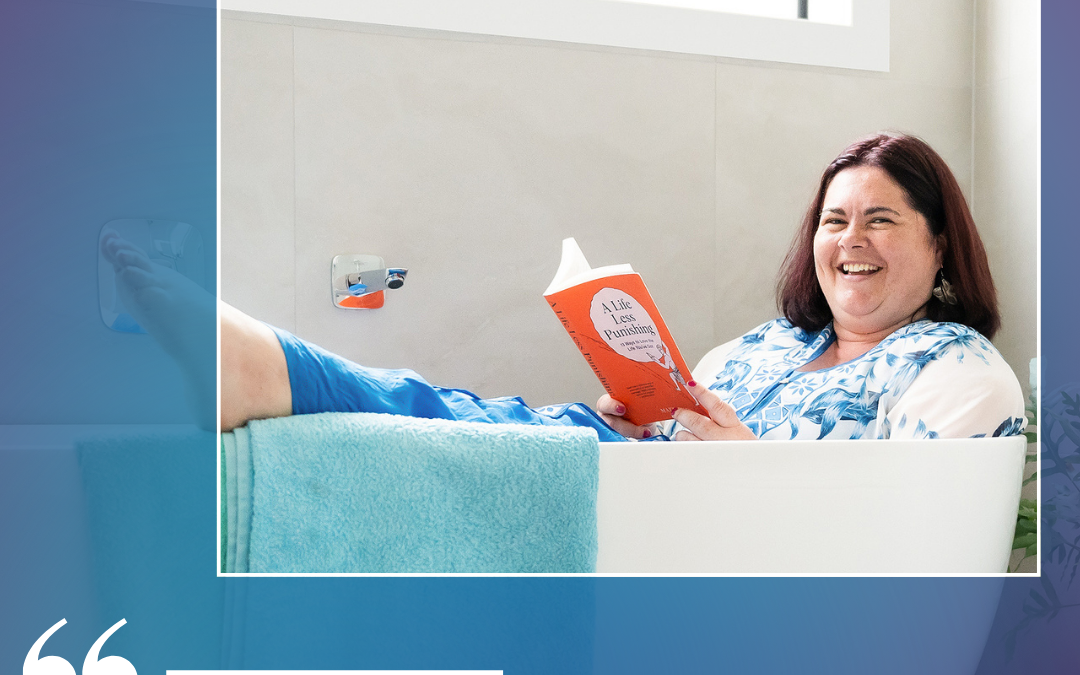
Making my bed, messaging a friend, spending some time with my daughter and husband helps. If I’m having a particularly hard time – usually when I’m premenstrual my bipolar symptoms and suicidal ideation are at their most challenging – I’ll have a “be gentle week”. This is when I strip it back to the absolute basics. I’ll have a long bath, reduce stimulation, watch comfort TV and cry to release built-up pressure.
I try to let go of ‘shoulds’ and comparing myself to others (or even more productive versions of myself). A good enough day means going with the flow as much as possible. I’m grateful that I work for myself so I can adjust my days and weeks to suit my mood for the most part.
Who has supported you in a way that truly made a difference?
I am blessed with some lovely friends and family who have stood by me, check on me oftenand pray for me. I love when people don’t force me to put on a smile or a brave face. They just let me be me.
I have a wonderful counsellor who I try to see at least once a month. I like how she is trained in different therapies and explains each of the concepts to me. I feel very safe and held with her. One of her sayings she said to me early on was “people go to therapy because they are pushed by pain or pulled by growth.” I started seeing her as I was in a lot of mental pain, but as I’m learning more about myself and my condition I can say I’m now more on the side of being pulled by growth.
I don’t know her personally, but I love the work of Dr Kristin Neff who writes about the power of self-compassion. I use the self-compassion mantra that she writes about in her book“Self-compassion” often. This mantra helps me when my emotions are really heightened and helps pull me back from a panic attack.
What parts of you exist completely outside your diagnosis?
My joy and silly nature (it doesn’t have to be mania).
My spirituality and relationship with God (it doesn’t have to be psychosis).
My sorrow for the world’s pain (it doesn’t have to be depression).
My creativity and productivity (it doesn’t have to be hypergraphia).
I’m naturally sensitive, poetic and intuitive. I’m a thoughtful and warm writer, wife, mum and friend.
I often struggle with these parts of myself – my joy and silly nature, my spirituality, my depth of feelings and empathy, my creativity and productivity – and I used to be hypervigilant if I was experiencing a strong emotion or reaction.
But I now give myself permission to feel deeply without making it all about an illness.
Years ago, I was riding a commuter ferry back from work. I had been unwell for a long time (and this was before I was diagnosed).
I was crying. Another passenger (who I didn’t know) came up to me and asked if I was okay.
“I’m too soft” I said.
“No, there are too many hard people in the world.”
This kind stranger planted the seed that sensitivity can be a gift.
I’m learning to love the softer side of me.
