
Something I am proud of in my journey:
I always knew something was different about me. Since childhood, I’ve felt things with an intensity that didn’t seem to match the world around me. My emotions could fill an entire room. Creativity became my language—dancing, acting, making art—each a way to translate the depth I carried inside. Yet even in the midst of what I loved most, there were times when showing up felt impossible. An undercurrent of sorrow wove itself through my days, like fog settling over a beach or a sad song lingering after it ends.
By 26, I recognized patterns I could no longer ignore. I asked my therapist for a diagnosis, already aware that bipolar disorder ran in my family. But nothing prepared me for how grief would sharpen everything. When my dad died suddenly, the loss fractured me open. PTSD took hold, and before I could name it, I was in a manic episode with psychosis. At the time, I believed something profoundly spiritual was happening—visions, connections, an overwhelming sense of meaning. In truth, it was my brain unspooling under the weight of trauma.
Hospitalization was terrifying, yet it saved my life. I remember the sterile hallways, the nights broken by the sounds of other people’s pain. The trial and error of medication. The slow, steady relief of feeling my feet on the ground again.
From that season came clarity: I wanted to use my experience to help others. I returned to school to become a psychotherapist, determined to offer the kind of support I once needed—a witness, a guide, someone who could sit with another in their rawest moments and not turn away.
Today, my work centers on walking with people through grief, pain, sorrow, and joy. I’ve learned we don’t have to choose between light and shadow—they are both part of being fully alive. I am here to feel deeply, to create, and to love without holding back.
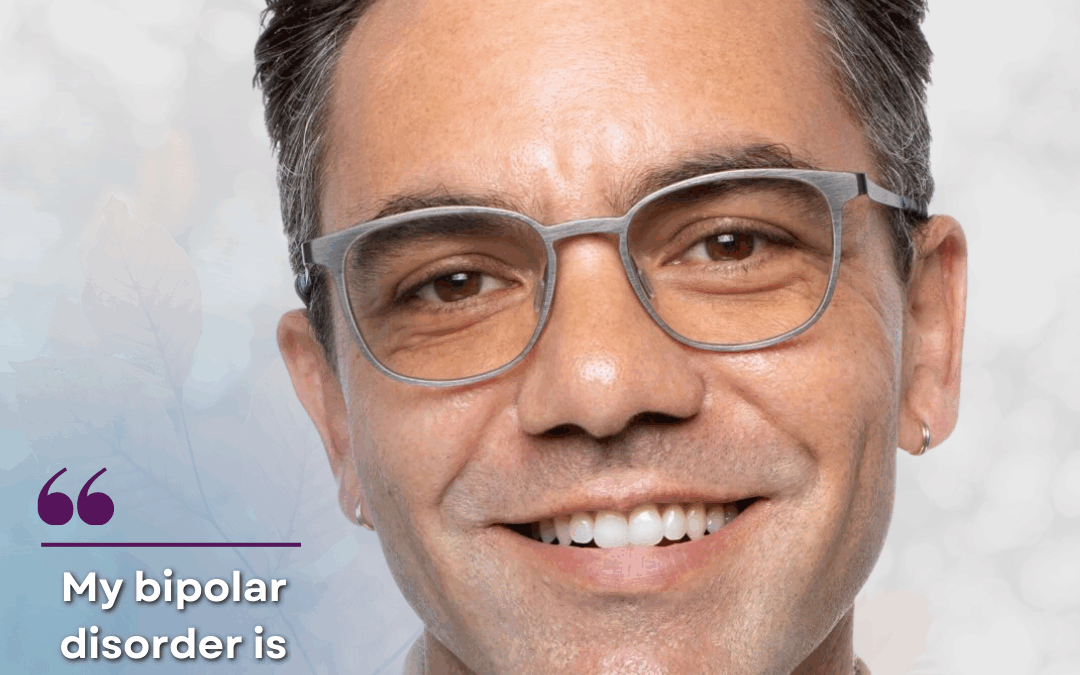
My bipolar disorder is not a flaw to fix, but a gift that keeps me connected. It is the lens through which I see the world, the bridge that allows me to meet others in their most human moments. It keeps me open. And for that, I am grateful.
Message for those who are newly diagnosed:
Not long after my diagnosis, I wandered into my local library and found an entire world waiting—shelves of books, both clinical and autobiographical, on living with bipolar. Immersing myself in these stories reminded me I was not alone. I learned that people with bipolar often share qualities I deeply value: creativity, empathy, and resilience. This wasn’t the end of my search for understanding—it was the opening of a door.
I felt relief. I felt empowered. I saw myself reflected in the music, paintings, poetry, and lives of others who share this experience.
To my bipolar siblings: we are here to do big things. Listen to each other’s music. Admire each other’s art. Dance together. Care for yourself with the same devotion you give to what you love. And don’t fear medication—it’s there to steady you, to hold your hand.
Love fully. Be loved as you deserve. You are not alone.
